Skip to content
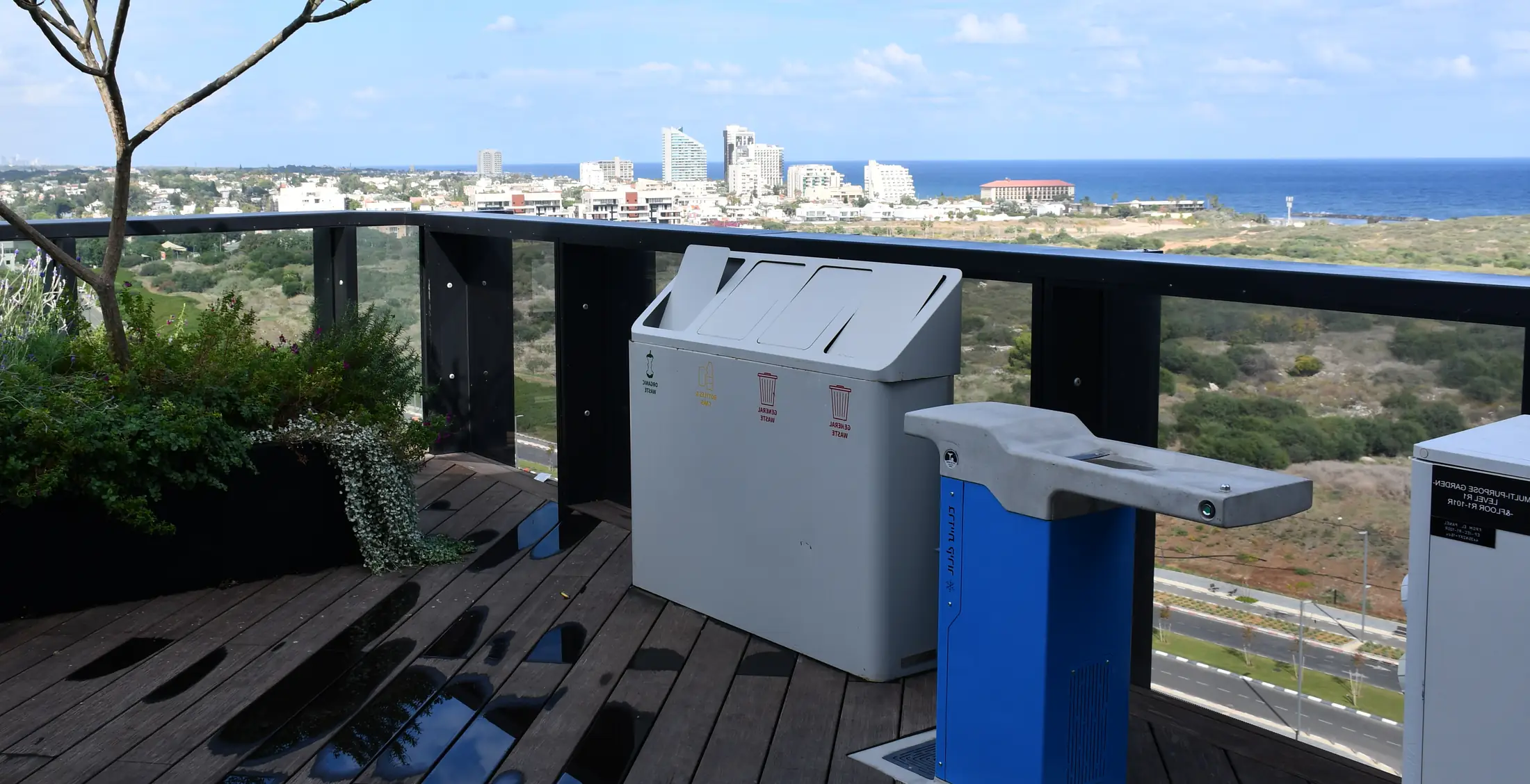
The roof terrace of Microsoft's green campus: a Watergen drinking fountain and a recycling station among planting, the coastal plain and the sea beyond
Case Studies

Case Study · Green Campus

Water from air, built into the campus

Microsoft built its green campus around energy and water efficiency. Watergen generates fresh drinking water on the roof, directly from the humidity in the air — an estimated 237,000 liters a year.

01 · The Challenge

Designing a campus with water efficiency in mind

When Microsoft designed its new green campus, sustainability was integrated into the building from the ground up.

Located in a region with hot, dry conditions and very limited rainfall for much of the year, the campus was designed with a concerted focus on reducing energy and water consumption.

The challenge was not simply to reduce water consumption, but to explore new and innovative ways to produce, conserve and reuse water on site.
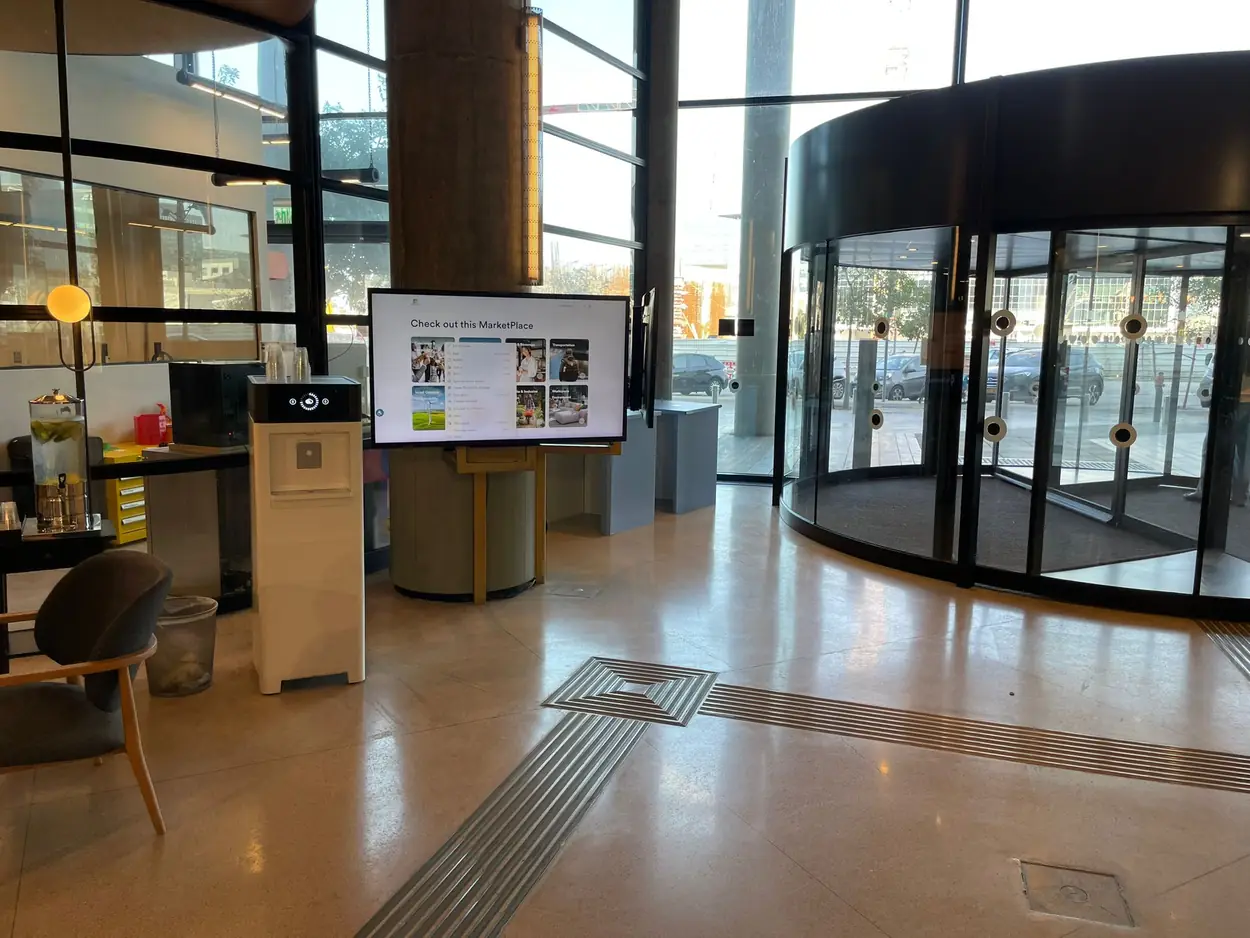
The Microsoft green campus lobby, with a Watergen drinking water dispenser beside the revolving entrance doors
A campus for some 2,000 people, in a region that sees little rain for much of the year

02 · The Solution

Water from the air

Watergen atmospheric water generators were incorporated into Microsoft’s green campus to produce fresh drinking water directly from humidity in the air.

The technology creates a new, locally generated source of drinking water — complementing the campus’s broader water-management strategy.

Watergen is part of a wider ecosystem of sustainable technologies deployed across the campus, alongside water-efficient fixtures, air-conditioning condensate reuse, solar photovoltaic panels and other environmental systems.

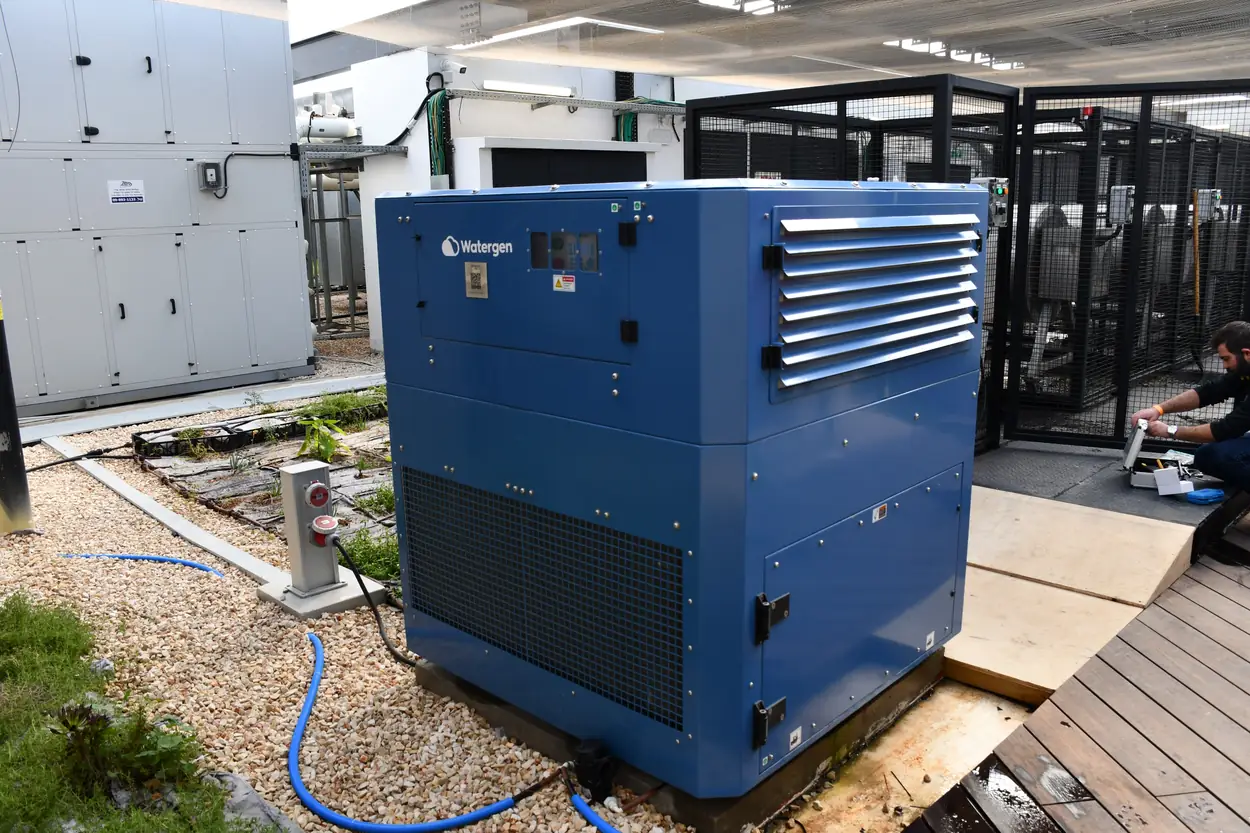
A Watergen atmospheric water generator installed in the rooftop plant area of the Microsoft green campus
The generator sits with the building’s plant on the roof

03 · The Result

237,000 liters of water from air — every year

Microsoft estimates that its green campus produces approximately 237,000 liters of fresh drinking water annually through Watergen’s atmospheric water generation technology. The figure is also reported in Microsoft’s Environmental Sustainability Report, based on company calculations.

The result is a visible example of how atmospheric water generation can become part of a modern, sustainability-focused workplace — creating drinking water directly where people work.

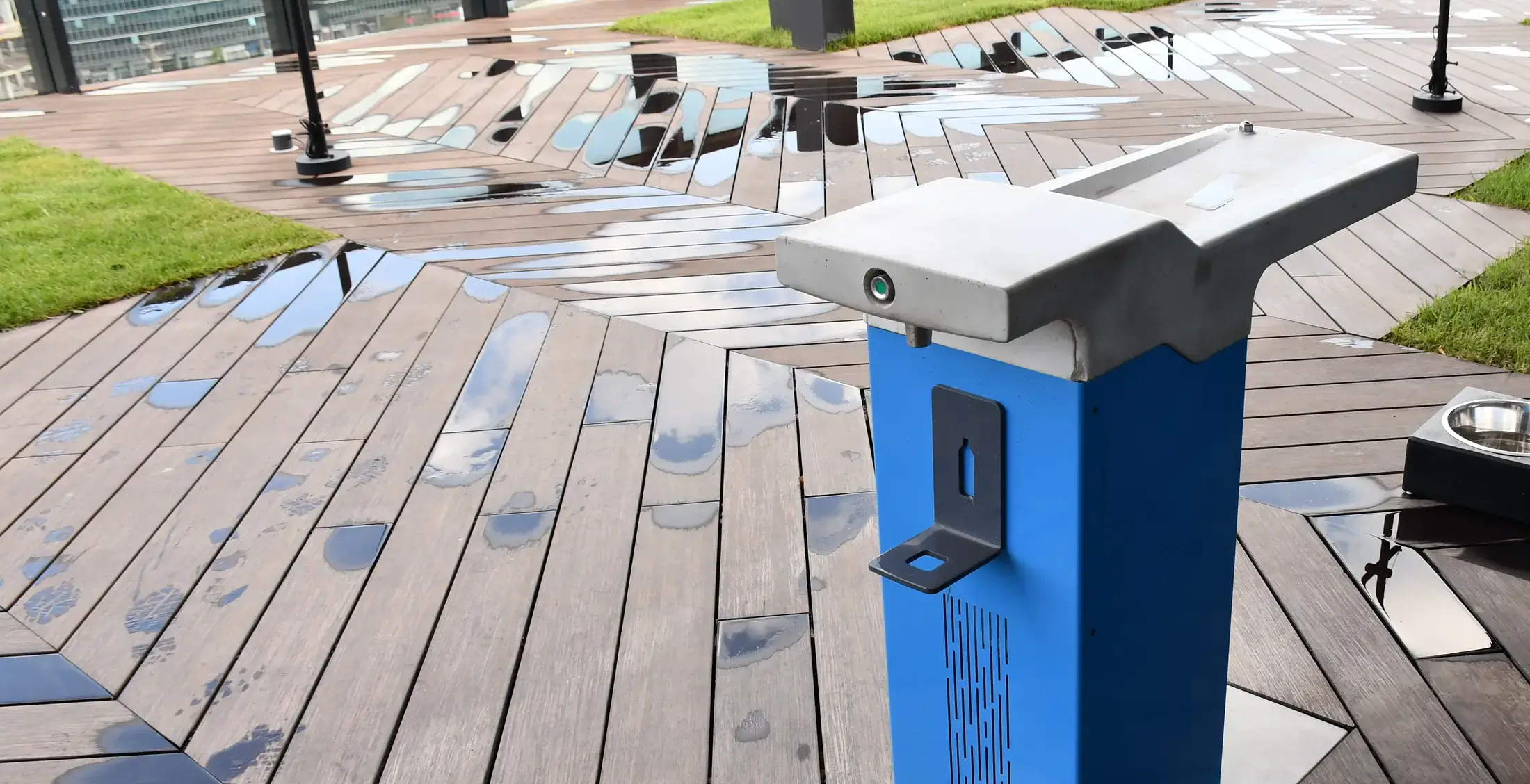
A Watergen drinking fountain on the campus roof deck, the city beyond
Drinking water at the point of use, generated on the roof above it

04 · What’s Next

A campus built for the future

Microsoft’s green campus demonstrates how water-from-air technology can become part of a broader vision for sustainable buildings — alongside water conservation, reuse, renewable energy and resource-efficient design.

Watergen transforms atmospheric humidity into a new source of drinking water — right where people need it.

The campus roof terrace: a Watergen drinking fountain and a recycling station among planting, the coastal plain and the sea beyond
Water from air alongside recycling, planting and solar on the campus roof

We aimed to create a space that would continue to be relevant for decades; no matter what comes next.

Vered GindiLead architect, Microsoft green campus

Why Watergen?

Sustainability, designed into the water supply.

  • Locally generated

    Drinking water is produced directly at the point of use.

  • Innovative

    Atmospheric water generation introduces a new source of drinking water into the built environment.

  • Resource efficient

    Watergen forms part of a broader campus strategy focused on reducing water consumption and improving resource efficiency.

  • Integrated by design

    Water generation was planned into the campus alongside its other environmental systems, not added to it afterwards.

As covered by

Building forwater efficiency?